Lipolysis & Fat Storage
Adipose Tissue Function
Adipose tissue serves as the primary energy storage depot in the body, storing excess energy in the form of triglycerides. This tissue plays essential metabolic roles beyond simple energy storage, including production of various signalling molecules.
Fat Storage Process
Fat storage occurs when dietary fat and carbohydrates are converted to triglycerides and deposited in adipose tissue cells called adipocytes. This process is regulated by hormonal signals, particularly insulin, which promotes fat storage during energy surplus conditions.
The process involves the uptake of triglycerides from the bloodstream and their storage within lipid droplets in adipocytes. Research documents how this storage capacity is substantial and capable of substantial expansion.
Lipolysis: Fat Mobilisation
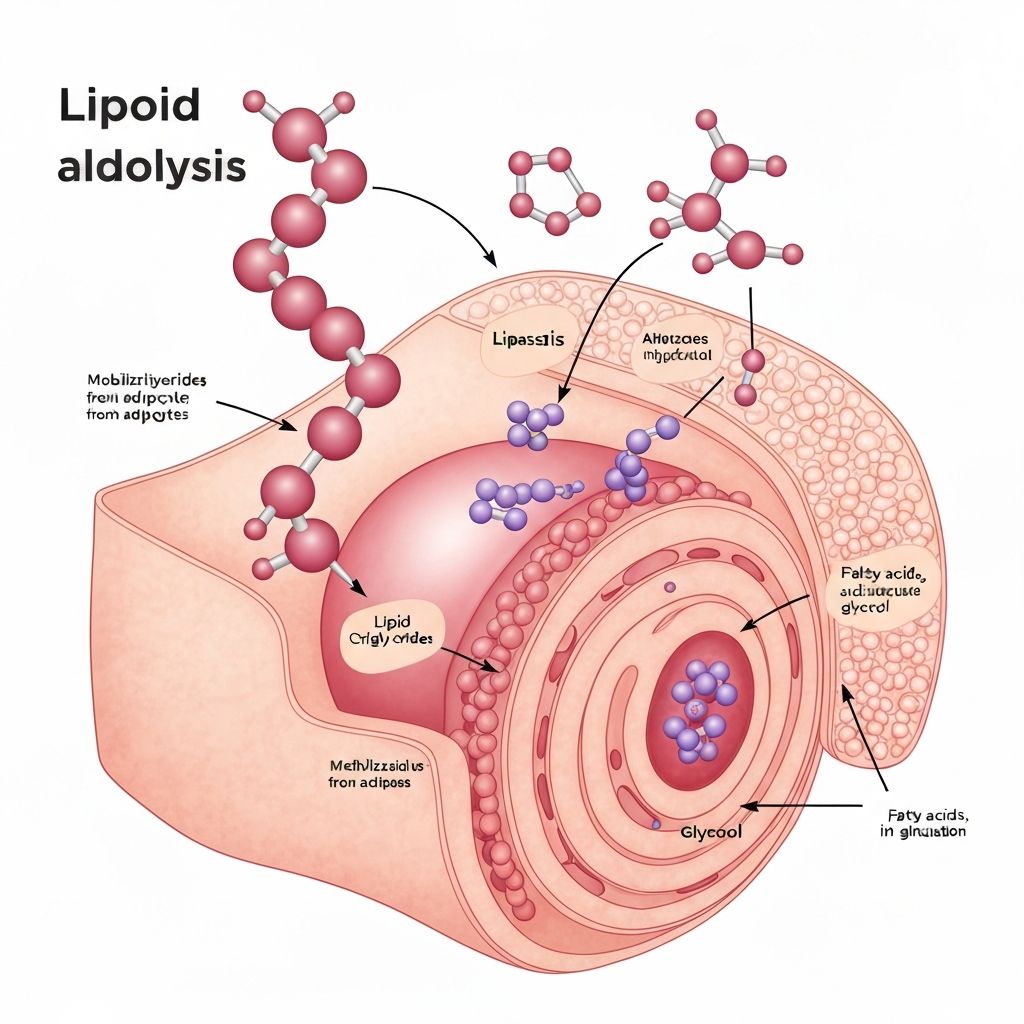
Lipolysis is the breakdown of stored triglycerides into free fatty acids and glycerol, making stored energy available for utilisation. This process is triggered during energy deficit and controlled by hormonal signals including epinephrine and glucagon.
The released free fatty acids travel through the bloodstream to various tissues where they can be oxidised for energy. The rate of fat mobilisation responds to the body's energy needs and hormonal signalling.
Hormonal Regulation
Insulin promotes fat storage by activating enzymes that incorporate fatty acids into triglycerides and inhibiting lipolysis. Conversely, hormones like epinephrine and glucagon promote lipolysis during fasting or energy deficit states.
Thyroid hormones and cortisol also influence fat storage and mobilisation, creating a complex hormonal environment that responds to metabolic demands.
Individual Variation
Significant individual differences exist in the distribution of adipose tissue, the capacity for fat storage expansion, and the efficiency of fat mobilisation. These differences reflect genetic factors, metabolic adaptations, hormonal sensitivity, and other physiological variables.
Research demonstrates that identical energy conditions can produce different outcomes in fat storage and mobilisation across individuals.
Metabolic Flexibility
The body's ability to switch between fat oxidation and carbohydrate utilisation represents an important metabolic adaptation. This metabolic flexibility allows the body to utilise available fuels efficiently across varying energy and nutrient states.
Research explores factors that influence metabolic flexibility including physical activity, dietary composition, and individual metabolic differences.